
True Religion | Since 2002
True Religion Sales LLCShopping
4.8465.00 Reviews
- Version
- 2025.AW-1.1.2
- Installs
- 100.00K
- Age Rating
- Everyone
Screenshots

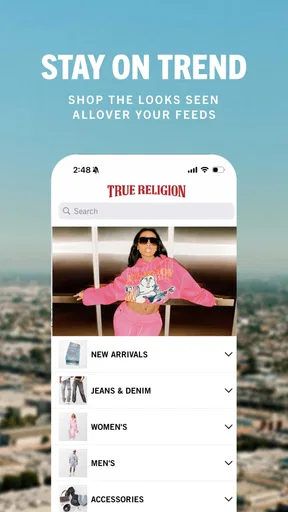

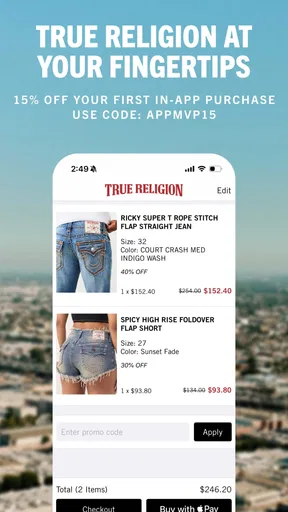
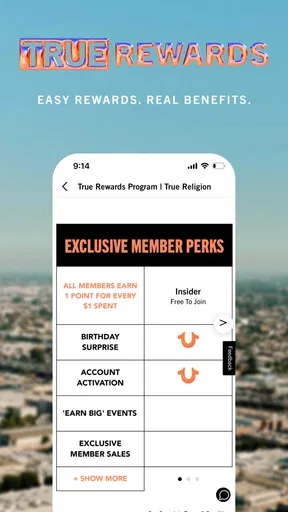


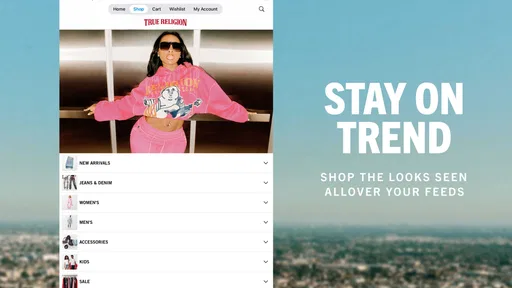
Our Review of True Religion | Since 2002
 Analysis by Appyee
I tested True Religion | Since 2002 as a shopping app for browsing the brand’s men’s and women’s denim and streetwear from a phone. My first impression was that it is most useful when I already have a clear idea of the style or fit I want, rather than when I am looking for a broad marketplace with many unrelated brands. The app keeps the shopping experience focused on True Religion, which makes it easier to stay within that label’s look and product range.
That focus also changes how I would use it at home. On a shared tablet or a phone that several people use, one person can browse jeans while another checks tops or streetwear, but the app should be treated as a personal shopping space rather than a household account hub. I would not expect it to manage separate family profiles or coordinate everyone’s preferences. Its role is simpler: help an individual explore the brand’s catalog and make a purchase decision.
How the app fits into everyday shopping
True Religion | Since 2002 is free to install, and the application is suitable for Everyone. It was developed by True Religion Sales LLC and is available for devices running Android 8.0 or later. Those details make it approachable for a wide range of phones, including older devices that may not run the newest shopping applications smoothly.
In practical use, I see two strong situations for it. The first is a quick browsing session when I want to check the brand’s current denim and streetwear selection without opening a general retailer. The second is a more deliberate session in which I compare styles, think about sizing, and return later before deciding. The app is less compelling if my goal is to compare several competing labels in one place or find the lowest possible price across the entire market.
The store listing presents a 4.8 average from around 4.4 thousand ratings, with more than 100 thousand installs. That level of adoption suggests the app has found a real audience, although I still judge it by how well it supports my own shopping habits rather than by popularity alone. A strong rating can tell me that many users are satisfied, but it does not remove the need to check product details carefully before ordering.
A realistic shared-device scenario
Imagine a household where one person is preparing for a casual event and wants to look through men’s denim, while another is searching for women’s streetwear. On a shared device, the simplest approach is to browse one person’s items, make notes about the preferred styles, and then hand the device over. I would avoid leaving a checkout screen open or assuming that the next user will know whose selections are on display.
This kind of handoff matters because clothing shopping is personal. A saved item, recently viewed product, or partially completed order can easily be mistaken for someone else’s choice. The app works well for browsing together, but the responsibility for keeping choices separate remains with the people using the device. If the household frequently shares one phone or tablet, a personal device is better for the final purchase stage.
A useful routine is to decide who is browsing before opening the app, keep a short note of the desired size and color, and close the session when finished. That is not a special feature of the application; it is simply a sensible way to prevent confusion when a fashion catalog is being used by more than one person.
What setup feels like before browsing
The basic setup is straightforward: install the free app on a compatible device and begin exploring the brand’s products. I would first make sure the phone has enough battery and a stable connection, especially if I am shopping away from home. Clothing images and product pages are much easier to judge when they load properly, and a rushed session can lead to avoidable mistakes.
I would also establish boundaries around purchases before letting a younger household member browse. Being rated for Everyone makes the app broadly accessible, but that age label does not mean every purchase decision should be unsupervised. A child or teenager may enjoy looking through designs, yet an adult should still handle payment, delivery details, and the final confirmation unless the family has explicitly agreed otherwise.
That distinction is important on a shared device. Browsing is one activity; placing an order is another. I am comfortable letting family members explore clothing together, but I would personally keep checkout under the control of the person responsible for the household purchase method. This prevents an accidental order and keeps financial information from being exposed during casual browsing.
Keeping choices coordinated without mixing accounts
For household coordination, I would use the app as a visual catalog rather than as a shared planning tool. One person can show another a pair of jeans or a jacket, discuss the intended outfit, and then decide who will complete the purchase. That works particularly well when the buyer and wearer are different people, such as a parent helping a teenager choose clothing.
The trade-off is that coordination may require a simple outside method, such as a note, message, or screenshot. I would not rely on the app alone to remember who wanted which item during a group shopping session. The more people involved, the more useful it becomes to record the product name, preferred size, and intended wearer separately before returning to the app.
This is also where the focused brand catalog can help. Because the application is centered on True Religion rather than a collection of unrelated sellers, a household discussion stays within one visual style. The downside is that the same focus limits comparison. If one person wants a different brand, a lower-cost alternative, or a very specific technical fabric, a general shopping app will usually be more practical.
For me, the best workflow is to browse together, narrow the choices, and then let the actual buyer review the details alone. That final private check gives the buyer a chance to confirm the size, color, shipping information, and total order before anything is submitted. It is a small habit, but it reduces the confusion that can come from passing one device around.
Age, trust, and responsible use
The Everyone rating makes the app suitable for general browsing across a household, but age suitability and purchasing responsibility are not the same thing. Clothing images and product discovery may be fine for younger users, while account credentials and payment information deserve a more careful boundary. I would let a younger family member help choose styles, but I would not hand over the final buying step without supervision.
Trust also matters when an account is already active on a device. If the phone belongs to one person, another household member should ask before changing account details or continuing an unfinished shopping session. The app is not a substitute for clear household rules. A simple agreement about who may browse, who may add items, and who may approve an order is more reliable than assuming everyone will understand the current account state.
For teenagers, the app can be useful as a way to develop personal style and compare outfits within the brand’s range. I would encourage them to think beyond the image: consider whether the item fits their existing wardrobe, whether the cut is suitable for everyday use, and whether the size information has been checked carefully. A visually appealing product is not automatically the right purchase.
For younger children, I see the app mainly as a supervised browsing experience. They can point out colors and designs, while an adult explains that adding something to a cart is not the same as owning it. That small distinction helps set realistic expectations and avoids the common problem of a child treating a shopping screen like a wish list that will automatically become an order.
Where the app is strongest
The clearest strength is concentration. If I want True Religion denim or streetwear, I do not have to filter through unrelated categories and sellers. The app gives the brand a dedicated space, which makes it easier to stay in the same design language while moving between men’s and women’s selections.
I also like the convenience of having that catalog on a phone. I can browse while comparing an item with clothes already at home, discuss a choice with someone nearby, or return to the decision later. That is more useful than it sounds: fashion purchases often depend on remembering what is already in the wardrobe, not simply reacting to a single product image.
The app’s free price is another practical advantage. There is no cost barrier to installing it and deciding whether the brand’s selection suits me. That makes it reasonable to try even if I am only curious about current styles. The real financial decision comes from the clothing purchase itself, so I would still approach checkout thoughtfully rather than treating free installation as a reason to buy quickly.
Its current version is 2025.AW-1.1.2, which is helpful context for users checking compatibility or troubleshooting an older installation. I would keep the app updated through the normal platform process, particularly if a shopping page behaves unexpectedly. An up-to-date installation is generally the sensible starting point before deciding that a problem is caused by the app itself.
Where I would choose another shopping option
I would skip this app if my main goal were bargain hunting across many brands. A broad marketplace is better for comparing prices, materials, delivery options, and competing fits in one search. This application is designed around a single label, so its convenience comes from focus rather than variety.
I would also choose a different route if I needed a highly collaborative family shopping system. The app can support a conversation, but I would not treat it as a shared household organizer. Families that need separate wish lists, formal approvals, or clear profiles for multiple shoppers may prefer a service built around those tasks.
Another limitation is the risk of making a decision from appearance alone. Denim fit can vary significantly between cuts, and a photo cannot replace checking the written product information or considering how the garment should be worn. I would use the app to narrow the selection, then slow down before ordering. That is especially important when several people are choosing clothing for one person, because a group may agree on the look without agreeing on the fit.
For shoppers who already know the brand and want a direct browsing experience, that limitation is manageable. For someone discovering denim for the first time, a physical store or a retailer with broader sizing guidance may offer more confidence. I would not call that a flaw unique to this app; it is the natural trade-off of shopping fashion through a focused mobile catalog.
Small habits that make the experience better
My first tip is to browse with an outfit in mind. Instead of saving or considering every attractive item, I would begin with the actual need: everyday jeans, a weekend layer, or a complete streetwear look. This keeps the session focused and makes it easier to judge whether a product adds something useful to the wardrobe.
Second, I would separate inspiration from commitment. A shared browsing session is good for discovering styles, but I would move the final decision to a quiet moment with the intended buyer. That prevents a group conversation from turning into an impulsive purchase and gives the person who will wear the item a proper chance to review the choice.
Third, I would write down the important details when coordinating with someone else. A short note containing the product, size, color, and wearer is more dependable than trying to remember several screens later. This is particularly useful when a parent and teenager are shopping together or when one person is browsing and another is responsible for payment.
Finally, I would close the app or return to a neutral screen after using a shared device. That simple step protects privacy between household members and makes the next session less confusing. It is a worthwhile habit even in a trusted home, because account boundaries are easier to maintain before a mistake happens than after an order has been placed.
My household verdict
After using True Religion | Since 2002, I see it as a focused shopping companion for people who specifically want the brand’s denim and streetwear. It is free, broadly accessible, and easy to place on a compatible Android phone. The strong 4.8 average from around 4.4 thousand ratings gives it a reassuring public reception, while the growing install base shows that it is not an obscure experiment.
My recommendation depends on the shopping goal. I would suggest it to a True Religion customer who wants a direct way to browse men’s and women’s styles, or to a household that enjoys choosing clothing together while keeping the final purchase with one responsible adult. I would not recommend relying on it as a family account manager, a multi-brand comparison engine, or an unsupervised purchasing space for children.
The best way to use this app is to share the inspiration, but keep the purchase decision clearly assigned. With that boundary in place, the experience feels convenient and well suited to personal fashion shopping. Without it, a shared device can make saved choices, account activity, and checkout responsibilities unnecessarily unclear.
Overall, I would keep it installed if True Religion is already part of my wardrobe or if I want to explore that label without the distractions of a general marketplace. If I needed broader choice, deeper household coordination, or extensive comparison between brands, I would use another shopping service instead. For its narrower purpose, though, it does the job well and gives the brand a practical place on my phone.
Verdict
Strengths of True Religion | Since 2002
- Official access to True Religion’s latest clothing and accessories
- Exclusive collections and brand-focused shopping experience
- Product details help compare sizes, colors, and available styles
- Convenient browsing for denim, apparel, footwear, and accessories
- Useful for discovering limited releases and seasonal promotions
Limitations of True Religion | Since 2002
- Some items may sell out quickly, especially limited-edition products
- Premium pricing may not suit shoppers on a tight budget
- App usefulness depends on shipping availability in your region
- Search and filtering may feel limited with a large product catalog
- Returns and exchanges may require checking the store’s specific policy
Similar Picks in This Category
View All
SHEIN-Shopping Online
Roadget Business PTE. LTD.4.8

Amazon Shopping
Amazon Mobile LLC4.4


Mercado Libre: Compras online
Mercado Libre4.8

Wish: Shop and Save
Wish US Holdings LLC4.7

Alibaba.com - B2B marketplace
Alibaba Mobile4.4
Frequently Asked Questions
What is True Religion | Since 2002?
True Religion | Since 2002 is the official shopping app for the True Religion brand, known for premium denim, casual clothing, footwear, and accessories. After exploring the app, I found that it is mainly designed for browsing seasonal collections, checking product details, discovering brand promotions, and purchasing items directly from a mobile device rather than serving as a social or entertainment application.
Can I purchase True Religion products through the app?
Yes, the app is intended to let users shop for True Religion products from their phones. You can browse categories, open individual product pages, review available colors and sizes, and add items to a shopping bag before completing checkout. Product availability, shipping options, prices, and promotions may vary depending on your country, location, and the store or website version connected to the app.
Does True Religion | Since 2002 offer exclusive discounts or promotions?
The app may feature special offers, seasonal sales, promotional collections, or benefits connected to the True Religion shopping experience. However, discounts are not necessarily available at all times, and some promotions may require an account, a promotional code, or specific purchase conditions. Before ordering, it is worth checking the promotion terms, expiration dates, exclusions, and whether the offer applies to your region.
Do I need an account to use True Religion | Since 2002?
You can generally explore products and view much of the available brand content without immediately creating an account. An account may be useful for saving personal information, tracking orders, managing favorites, receiving promotional communication, or making future purchases faster. If guest checkout is supported, registration may not be mandatory, but the exact options can depend on the current app version and your location.
Is True Religion | Since 2002 safe to download and use?
The app should be downloaded only from the official Google Play Store or Apple App Store, where you can verify the developer name, ratings, permissions, update history, and user feedback. During testing, the main purpose appeared to be shopping and brand discovery, but you should still review requested permissions and privacy information. Use secure payment methods, keep the app updated, and avoid unofficial download files.
